
Retirement Gal

All Things for a Secure Retirement

  • Home
  • About
    • Terms of Use
  • Contact

Keep on Compounding

  • Retirement
Share:
fb-share-icon
Tweet

45 percent of people who switch jobs before age 59½ cash out on their retirement plans. Perhaps sometimes this is necessary, especially if the reason why you cashed out was due to an unexpected job loss where no other sources of income were immediately available to you. Still many others do it without fully understanding the potential harm they are doing to their long-term retirement prospects. Right off the top, you’re giving up 20-40 percent of your money if you cash out on your plan to taxes and penalties. Moreover, you’re missing out on future compounding of that wealth.

To put it into numerical context, here’s an example. The following table shows how much a person age 30 who earns $40,000 could save in a 401k plan using the AARP 401k calculator. The example assumes the person’s contributions started at $0 at age 30 and assumes an annual contribution of 10 percent of his salary, an annual salary increase of 1 percent, an annual rate of return of 7 percent, and an employer match of 50 percent of the employee’s contributions up to 6 percent of the employee’s annual salary.
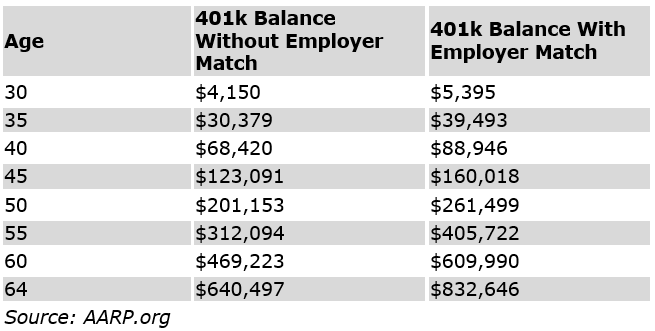
Saving and compounding return results in 401k plan

If this person withdrew his savings balance of $88,946 at age 40, then that money would never have a chance to keep earning compound interest up to his retirement at age 65, resulting in a loss of $743,700! Even cashing out just a few years before the example retirement age of 65 could result in a $200,000 loss in earning potential.

So unless the money is absolutely needed, think twice about just cashing out that 401(k) balance when you switch jobs. Know your options, which includes rolling the proceeds into a new employer’s 401(k) plan or your own IRA account so it continues to grow tax-deferred and compound interest until you need it in retirement.

401(k) Compounding Interest Retirement Savings
June 7, 2016 Melanie

Post navigation

Power of Attorney – what is it and why you need one → ← Preparing for Retirement in America

Connect with Us

RSS
Facebook
Facebook
fb-share-icon
Twitter
Visit Us
Follow Me
Tweet
LinkedIn
Share
YouTube
Follow by Email
Financial Perspectives

More from Us

As part of Financial Perspectives, we share our unique view through these other affiliated blogs:
Financial Perspectives
Investment Edge
Retirement Corner
The Sharp Chartist

Recent Posts

Expect the Unexpected

Expect the Unexpected

Share:

More Info
10 Ways Retirement Has Changed Over the Last Decade

10 Ways Retirement Has Changed Over the Last Decade

Share:

More Info
It’s RMD Season!

It’s RMD Season!

Share:

More Info
2020 Adjustments for Taxes and Contributions

2020 Adjustments for Taxes and Contributions

Share:

More Info
Social Security 2020

Social Security 2020

Share:

More Info
How Life Expectancy Impacts your Retirement Plan

How Life Expectancy Impacts your Retirement Plan

Share:

More Info
Like Squeezing Blood Out of a Turnip

Like Squeezing Blood Out of a Turnip

Share:

More Info
Breaking Bad Habits

Breaking Bad Habits

Share:

More Info
Break Out Those “Childproof” Locks

Break Out Those “Childproof” Locks

Share:

More Info
Real (Purchasing) Power

Real (Purchasing) Power

Share:

More Info

Disclaimer

The information provided on the Blog is provided for informational purposes only and should not be used as a substitute for personalized professional financial advice. Participation in any way with the Blog does not constitute an investment advisory, financial or retirement planning engagement. You should consult with your investment adviser or another financial professional before making any investment decisions. While all information on the Blog is gathered from sources that we deem to be reliable, we cannot guarantee the completeness and/or accuracy of such information. From time to time general investment guidance may be given in the Blog in response to questions asked by readers of the Blog. There is no guarantee as to the risk, returns, and performance of any investments referenced herein.

Copyright Retirement Gal and Financial Perspectives | Terms of Use