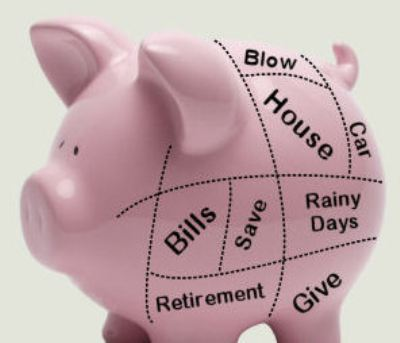


Regardless of the date, it’s always a good time to look back on financial goals. Whether the snow is melting, the leaves are changing, or even if it’s January 7th, budget goals are good for anytime of the year.
If you’ve failed to meet a goal before, you might be wondering: What can I do differently in the coming year to change the trend? Often the advice of physical fitness experts, centered around ideas for new diets or trendy exercises, are old hat by March 1. Let’s focus instead on the goal of financial fitness for a full year – something that never goes out of style.
Here are five steps for creating a budget that has a fighting chance of seeing you all the way through the year.
1. Consider a change in vocabulary
Many financial planners prefer the term “spending plan” to “budget,” because of the latter word’s implied sense of restriction. A “spending plan,” they argue, is a step toward the ultimate goal of financial freedom and abundance. Better still, think of your budget as a “spending and saving” plan, and be sure to include a line item for regular savings as a cash expense. The similarity between financial and physical fitness is relevant here: think of those you know who have succeeded in slimming down by developing “eating plans,” rather than going on a diet.
2. Make the major points of your spending plan both realistic and aspirational.
Before creating your spending plan for this year, take a hard look at your spending patterns from last year. Review your expenses over the past 12 months to create a specific list, categorized by your outflows. (A “miscellaneous” category is not allowed!) Think about how you spent your money. Was it on crucial fixed expenses, such as rent, loan repayments, or insurance premiums? Were there variable expenses for items that were nevertheless necessary (such as food, utilities, clothing or transportation)? Or did you spend a lot on recreation or entertainment? Categorizing past expenses in this way will show you where to find more money for the upcoming year
3. Account for your use of cash.
How much cash do you typically spend in a day, or a week? Many are shocked to realize how much money flows from the ATM to their wallets and then into thin air, without a trace. One of my clients calls this “walking around money,” while I call it simply “gone.” Tracking your use of cash is the first step to taking control of and redirecting your money to more conscious and planned uses in the year to come
4. Timing matters.
Businesses often fail not as a result of unprofitability, but because of a lack of liquidity. The same is true for individuals: You may earn enough income each year to meet your annual expenses, but if your bills come due before your next paycheck, you may find yourself running to credit cards or other sources of expensive and unnecessary debt. For this reason, it’s best to budget in smaller increments, ideally monthly, to allow you to plan for those lumpy, irregular expenses that can be the undoing of even the most dedicated penny pincher. Knowing that there will be cash shortfalls in any given month means that you can begin to set aside reserves in earlier months to cover the potential red ink.
5. Don’t throw the budget baby out with the bathwater.
Don’t let a spending splurge or two convince you that budgets don’t work. The best budgets are guides, not ironclad rules. Your goal is to achieve overall balance rather than strict adherence to limits in every category. Continue to compare your actual expenses to their budgeted amounts, and you may find that overspending in one area is not necessarily a problem of overindulgence, but rather an instance of under-budgeting. Take the differences between what you spend and what you have allocated to be spent, and use them to clarify your goals and improve your planning for the next budget cycle.
Originally posted at CFP.net