

In a recent Gallup poll, almost half of those who are not yet retired (46%) projected they won’t be financially comfortable when they stop working. And in another poll, published last June by Ameriprise Financial, only 21% of the retired respondents said they felt confident about drawing down their assets.
This indicates to me that many people are concerned about transitioning from the mindset of growing your money to living off of it. Frankly, this is not an easy transition to make due to the fact that you are now asking your money to do something it has never done before.
Up until retirement, the main goal has been to grow the pile of money as much as possible, but after retirement that goal changes. Retirees desire certainty in the fact that the money will be there when they need to spend it and it will last as long as they do. This certainty can come from a variety of strategies and investments, but the first step is developing a structured income plan in retirement: “How will you replace your paycheck?”
Without a plan, it can feel as though you’re stepping off solid ground and over the side of a cliff. You are losing the certainty that comes from the regular paycheck coming in every few weeks that you use to pay the bills, put meals on the table and buy birthday presents for the grandchildren.
With a plan, you’ll have a better chance of avoiding the worst-case scenarios that make pre-retirees and retirees so nervous: that you might have to go back to work or substantially downsize your lifestyle.
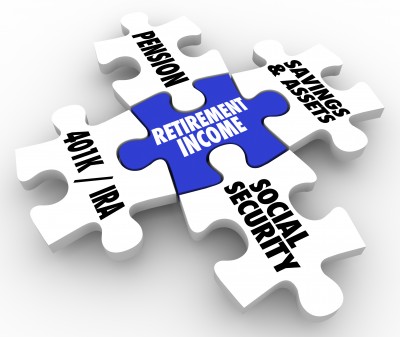
Some of the things I consider when analyzing income in retirement and developing income plans are:
1. Your Social Security benefits.
The government has closed a lot of the loopholes that used to be available to retirees who want to maximize their Social Security benefits. But there are still hundreds of claiming strategies that every pre-retiree should check out with an experienced financial professional — because nearly two-thirds of pre-retirees say they aren’t confident with how Social Security works. (Don’t expect the folks at your Social Security office to provide you with advice. They can’t.) Some considerations to keep in mind:
Consider when to claim. Talk about what age is best for you and your spouse to turn on your benefits. You don’t have to claim Social Security just because you’re not working anymore, and the longer you wait — up until age 70 — the larger your checks will be.
Have a spousal strategy. Keep in mind that the lower Social Security payment will go away when one spouses dies, so you’ll want to maximize your benefit from the higher earner. You also should have a plan for how the surviving spouse will replace that lost income stream for the rest of his or her life. You shouldn’t count on expenses dropping enough to make up the difference.
2. Your pension.
Fewer employers are offering defined-benefit plans (pensions), and some are getting rid of the plans they have. If you have a pension coming, carefully consider the claiming options.
Keep your spouse in mind. I nearly always recommend that married workers opt for the largest spousal benefit possible. Yes, the monthly check will be lower, but if the pension holder passes away and the survivor loses that income stream — plus the smaller Social Security check — the impact on his or her lifestyle could be substantial.
Don’t get greedy. If your employer offers a lump-sum payout, don’t let greed knock a hole in your plan. It’s tempting to take the money and throw it into the market, hoping for spectacular returns. But if there’s a market correction, especially early in your retirement, you could be in trouble. What looks like solid ground may be more like quicksand.
3. Your investment savings.
These days, most workers use a defined contribution plan (IRA, 401(k), 403(b), etc.) to sock away money for retirement. For many, it’s a barrel of odds and ends they plan to spend down over decades. If they’ve thought at all about a safe withdrawal rate, it’s the old-fashioned “4% rule,” which should now be closer to 3% to make that money last.
Get Protective. When you’re younger and you have time to recover, a market decline is discouraging but not devastating. When you’re pulling money out to live on, that changes. Consider moving your mindset to protecting what you have from the risk of growing the money as much as possible.
Think taxes. You’ll also want to consider the tax consequences of your investment plan. Don’t forget that Uncle Sam will want his share of any money you pull from a tax-deferred account. Your financial adviser or accountant can help you with strategies to deal with that looming tax liability.
Stay diversified. Unfortunately, there is no one financial tool designed to do every job. You have to consider all the options and what each one can do for your situation. For example, some people like real estate. If you have no experience with managing rental properties, I would certainly be cautious of this strategy, which might be like trading the job you had for another you like less. Bonds tend to be a favorite for conservative investors, and they’re traditionally a solid source of income, but in a rising interest rate environment, bond prices are likely to go down, so be cautious.
There’s no predicting what the future holds when it comes to any income stream or strategy. Therefore, you’ll want to check in on your income plan periodically after you retire and whenever you have a big life change.
But having a plan in place before you retire can get you off to a more secure and confident start. And you can make the move from your steady paycheck to your retirement without missing a step.