


Although the IRS imposes income tax on the Social Security benefits of certain senior citizens, the majority of states don’t. In fact, only 13 states tax Social Security benefits, and many of these have more generous income thresholds than the IRS.
I won’t keep you in suspense. If you live in any of these 37 states, you won’t pay taxes on your Social Security benefits.
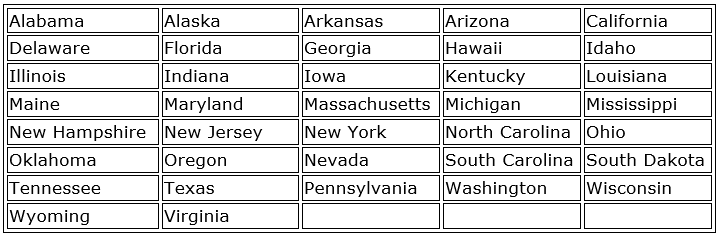
Of these 37, nine states — Alaska, Nevada, Washington, Wyoming, South Dakota, New Hampshire, Florida, Texas, and Tennessee — don’t have an income tax, so naturally, Social Security isn’t subject to any tax.
Of course, it’s nice for retirees to be able to keep all of their Social Security benefits, but keep in mind that this is just one piece of the puzzle. There are several other ways that states can tax residents, and retirees in particular, without touching their Social Security benefits.
For example, even though Social Security isn’t taxed, California is not a particularly tax-friendly state. The average combined state and local sales tax is on the high end at 8.48%, as is the top state income tax bracket of 13.3%. In addition, nearly all retirement income (other than Social Security and railroad retirement benefits) are taxed, including pensions, traditional IRAs, and 401(k)s.
On the other hand, even though a state taxes Social Security benefits, it could otherwise be rather tax-friendly.
West Virginia is a good example, with a fairly low 6.2% average sales tax, a 6.5% top income tax bracket, and property taxes that are significantly below average, with an additional break available for seniors. In addition, West Virginia allows taxpayers to exclude up to $8,000 ($16,000 per couple) of retirement income from their state taxes.
The point is that there are several factors to consider when determining if a particular state is one of the most tax-friendly states for retirees.
As a final thought, there’s no one-size-fits-all definition of a “tax-friendly” state. It’s important to take your personal situation into account.
Just to name one potential situation, if most of your retirement income comes from non-taxable sources, such as savings in a Roth IRA, you may not need to worry about taxes on your Social Security benefits, regardless of where you live.
The bottom line is that whether or not you might have to pay state income taxes on your Social Security benefits, it’s important to consider all of a state’s tax laws as well as your own personal situation to determine if they could potentially hurt or benefit you.
Source: https://www.fool.com/retirement/2017/09/10/37-states-that-dont-tax-social-security-benefits.aspx